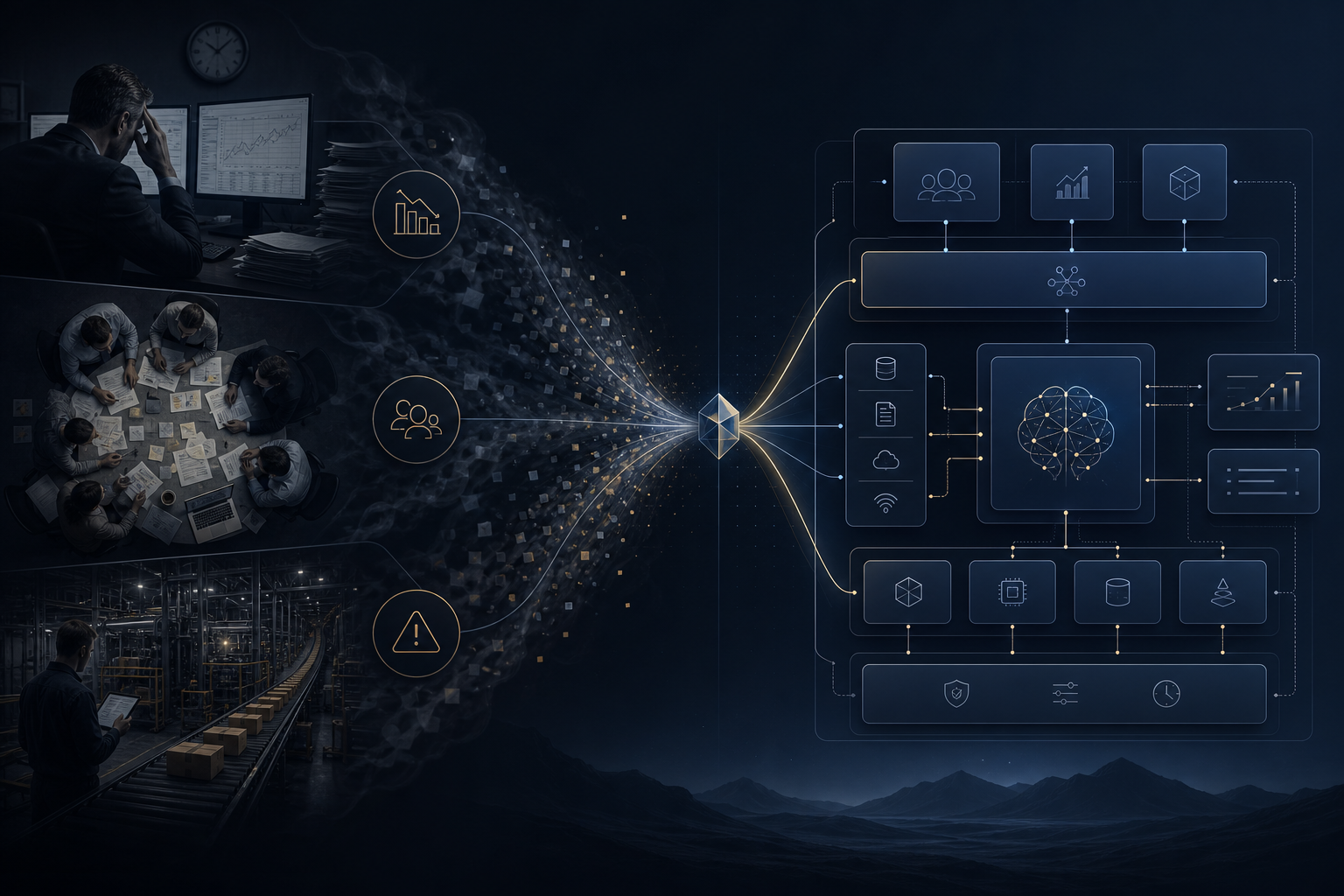
Why pressure matters first
Most AI architecture conversations start too high in the stack. People talk about model choice, context windows, agent frameworks, and tool orchestration before they have named the business pressure that the system is supposed to absorb. That is backward. The right place to begin is with the drag that leadership can already feel: reporting arrives late, follow-through is unreliable, people are chasing updates, and too much work still depends on memory and goodwill.
Architecture should inherit the shape of the problem
When AI is designed against real operating pressure, the architecture becomes clearer. Memory stops being a novelty and becomes a continuity requirement. Verification stops being a quality-assurance add-on and becomes a control requirement. Human oversight stops being philosophical decoration and becomes part of the production logic. In serious firms, those are not optional traits. They are the conditions under which AI becomes safe to trust.
The practical implication
A useful AI system for business should be designed from the bottleneck upward. If the business is suffering from coordination strain, build for routing, accountability, and visibility. If the business is suffering from reporting lag, build for structured intake, summary discipline, and decision-ready output. If the business is suffering from context loss, build for memory governance, not just memory accumulation. Pressure tells the architecture what it needs to become.